





It usually starts small. A PDF is shared over email. Feedback comes in through comments, then Slack messages, then a quick “approved” on WhatsApp. Someone downloads the file, renames it final_v3_USE_THIS_ONE.pdf, and sends it to the printer.
Two days later, someone else spots an outdated ingredient list.
Now the team is digging through inboxes, cross-checking versions, and trying to figure out which file was actually approved. Meanwhile, production timelines are slipping. Launch dates are moving. And no one is entirely confident that the latest file is correct.
For many mid-sized brands, this is the unfortunate reality right now.
Why mid-sized brands are still underserved
Most solutions in this space are built for enterprise environments.
That means:
- Dedicated IT teams
- Complex integrations
- Large-scale infrastructure
But mid-sized brands operate differently.
They are:
- Scaling rapidly
- Managing increasing SKU complexity
- Operating without enterprise resources
They don’t need transformation. They need control.
The breaking point: when growth exposes the process
Manual workflows don’t fail immediately. They fail at scale; a brand managing 10 SKUs can operate on spreadsheets, but a brand managing 100+ SKUs across markets cannot. This is typically when teams begin evaluating why structured artwork systems become necessary as brands scale, especially as complexity outpaces manual coordination.
The real problem is the system
The core issue is fragmentation. Design lives in one place. Compliance sits in spreadsheets. Approvals and feedback are scattered across channels.
These systems were never designed for packaging workflows involving multiple stakeholders and regulatory constraints. This creates predictable failure points, like:
- Version confusion
Multiple versions of the same file circulate simultaneously.
Version confusion is a common cause of packaging and labeling errors, especially when multiple teams work across duplicate files, email approvals, and disconnected review systems. Many organizations only recognize the extent of the issue after implementing structured packaging file revision workflows and centralized version control.
- Approval bottlenecks
Approvals routed through emails create delays that compound across projects.
What’s missing is structure. In practice, teams see immediate improvements when they learn how to streamline packaging approvals without relying on email chains, replacing fragmented communication with defined workflows.
- Manual errors
Copy-pasting regulatory data introduces risk at every step.
Human error is a primary cause of packaging recalls. This is why leading teams shift toward workflows where compliance is embedded.
What changes when the system changes
When companies move from fragmented tools to structured workflows, the shift is more than an optimization—it is a structural improvement that transforms operational speed and risk management.
- Accelerated review cycles: By replacing email-based feedback with direct annotation tools, teams can drastically reduce review time. For instance, Home Chef reduced their label time by 67% by streamlining their proofing process and eliminating the back-and-forth ambiguity of manual trackers.
- Enhanced version control: Centralizing assets eliminates the chaos of scattered email threads. ParagonCorp achieved greater control over its artwork by moving projects into a unified platform, replacing manual reporting with real-time dashboard analytics.
- Embedded compliance: Transitioning to an integrated system allows for proactive risk management. Rather than relying on human vigilance, brands can automate rulebooks for regulatory standards, such as allergen detection, ensuring 100% label compliance while simultaneously tripling operational efficiency.
How Artwork Flow by Esko fixes the problem
Artwork Flow by Esko helps mid-tier brands get to market faster by bringing everything together into one system. This way, feedback doesn’t live across channels, and errors don’t slip into print.
- Centralized proofing and feedback
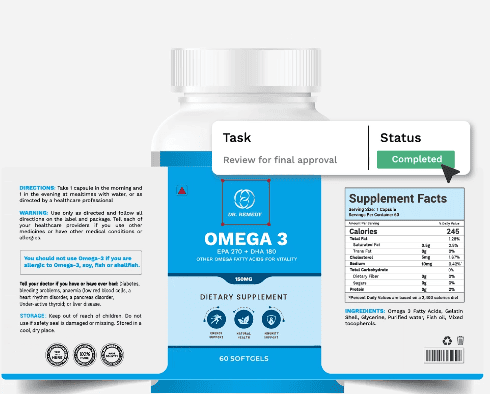
Artwork reviews often become chaotic when feedback is scattered across emails, spreadsheets, and messaging tools. Artwork Flow brings all annotations, comments, and approvals into a shared proofing environment, ensuring stakeholders always review the latest version. This reduces revision cycles, prevents missed feedback, and accelerates approvals.
- Version control & audit trails
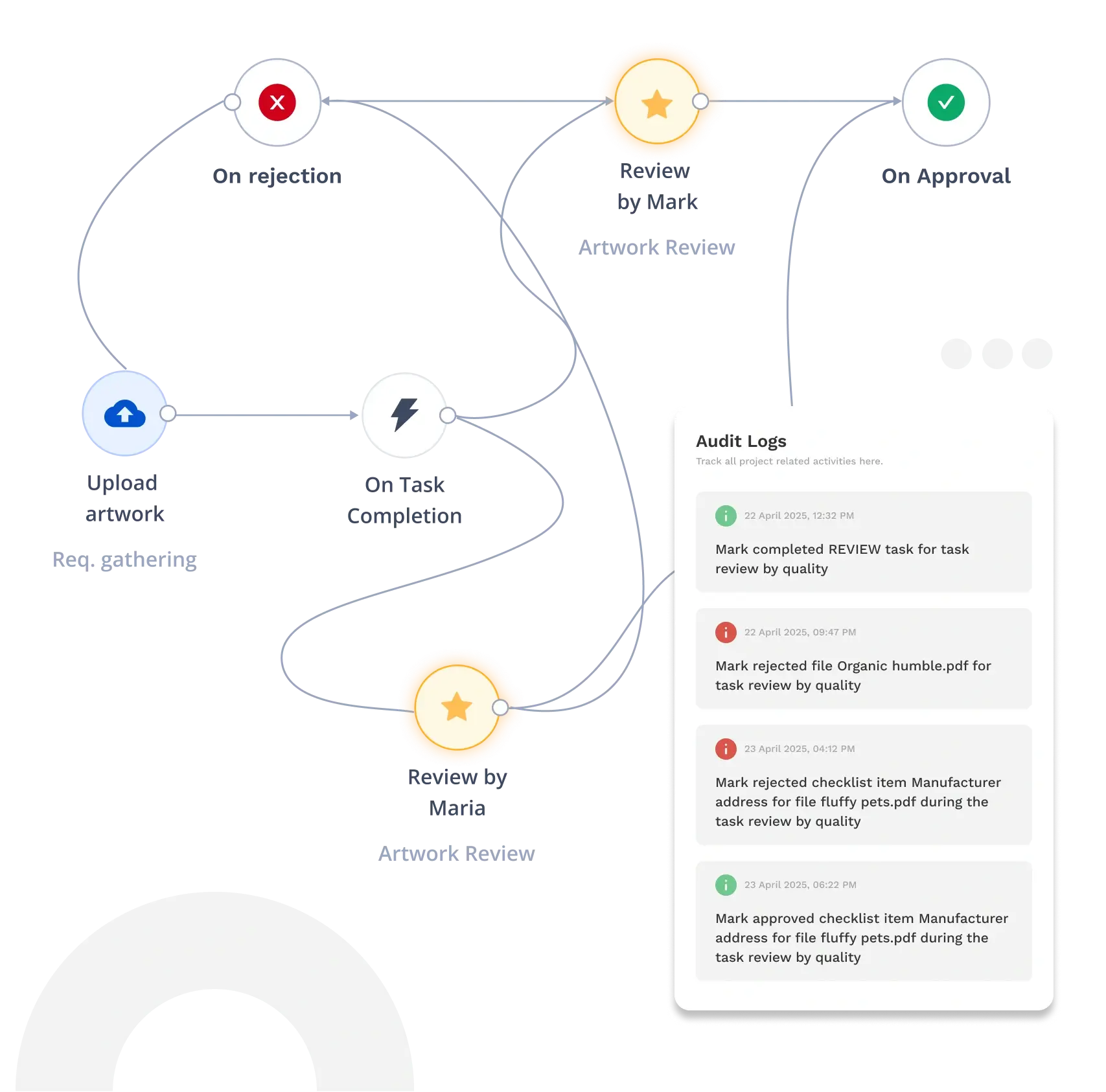
Every change is recorded. Every approval is documented. This eliminates ambiguity and ensures accountability.
- Reduced compliance risk
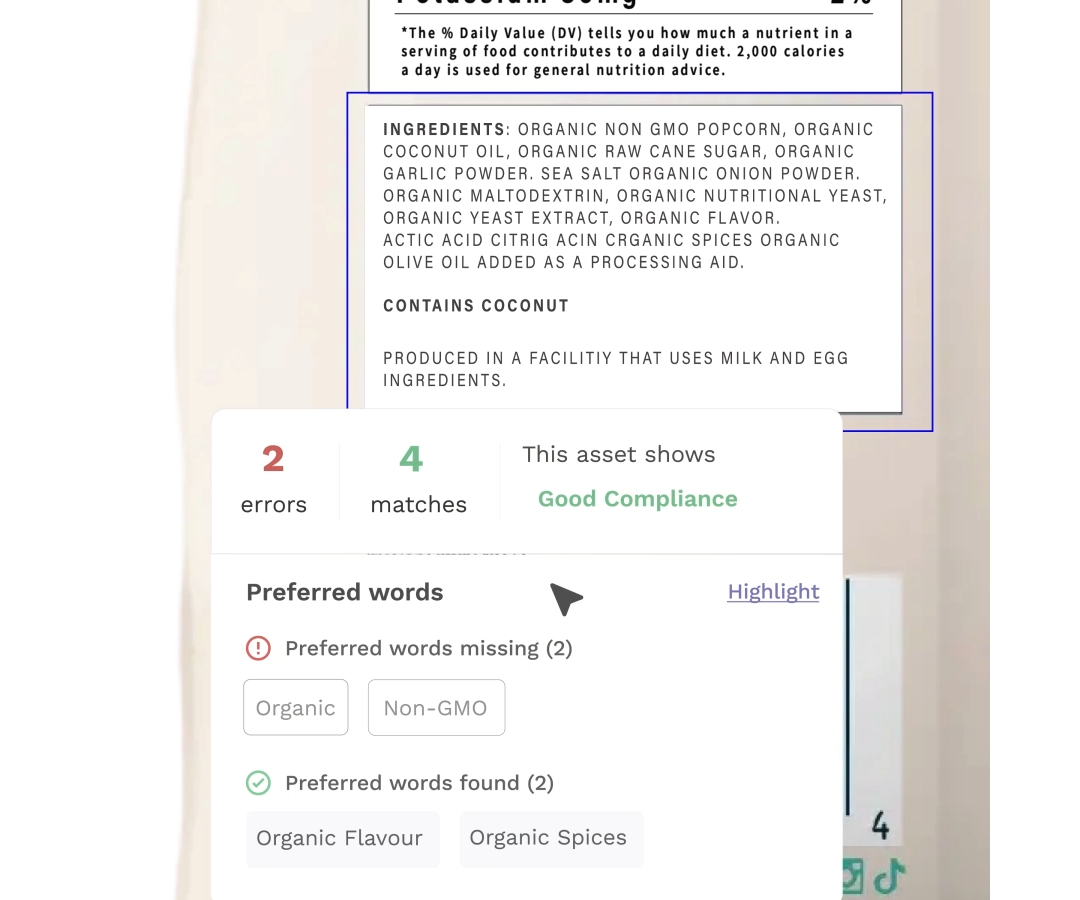
AI-powered checks validate:
- Allergen declarations
- Barcode accuracy
- Regulatory text
- Label formatting
This prevents costly, preventable errors before production.
- A single source of truth
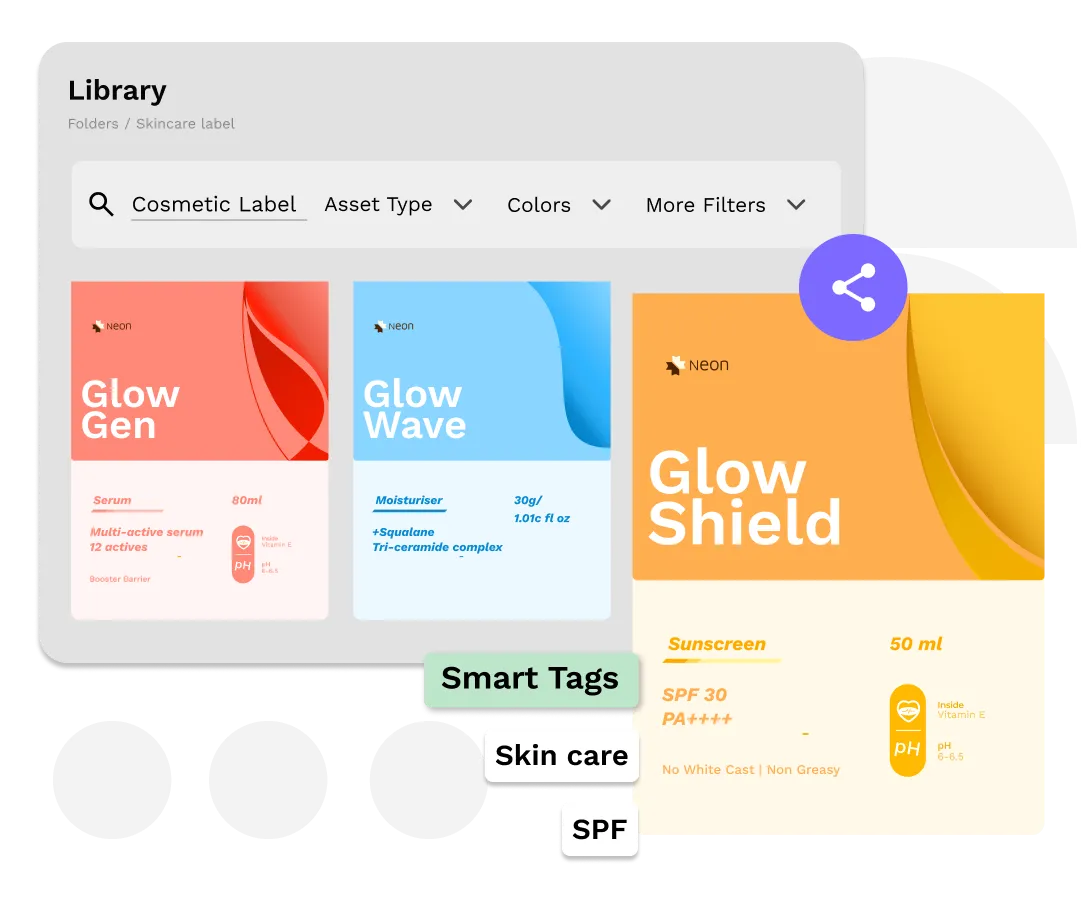
All artwork, feedback, and approvals exist in one centralized system. Instead of searching for files, teams work from a single, reliable version. This shift becomes clearer when looking at how centralized artwork proofing systems work in practice, where collaboration, feedback, and approvals happen in one place.
- Faster time-to-market
When proofing, approvals, asset management, and compliance operate within one system, teams spend less time resolving operational inefficiencies and more time launching products. By reducing delays and minimizing rework, brands can respond faster to changing market demands.
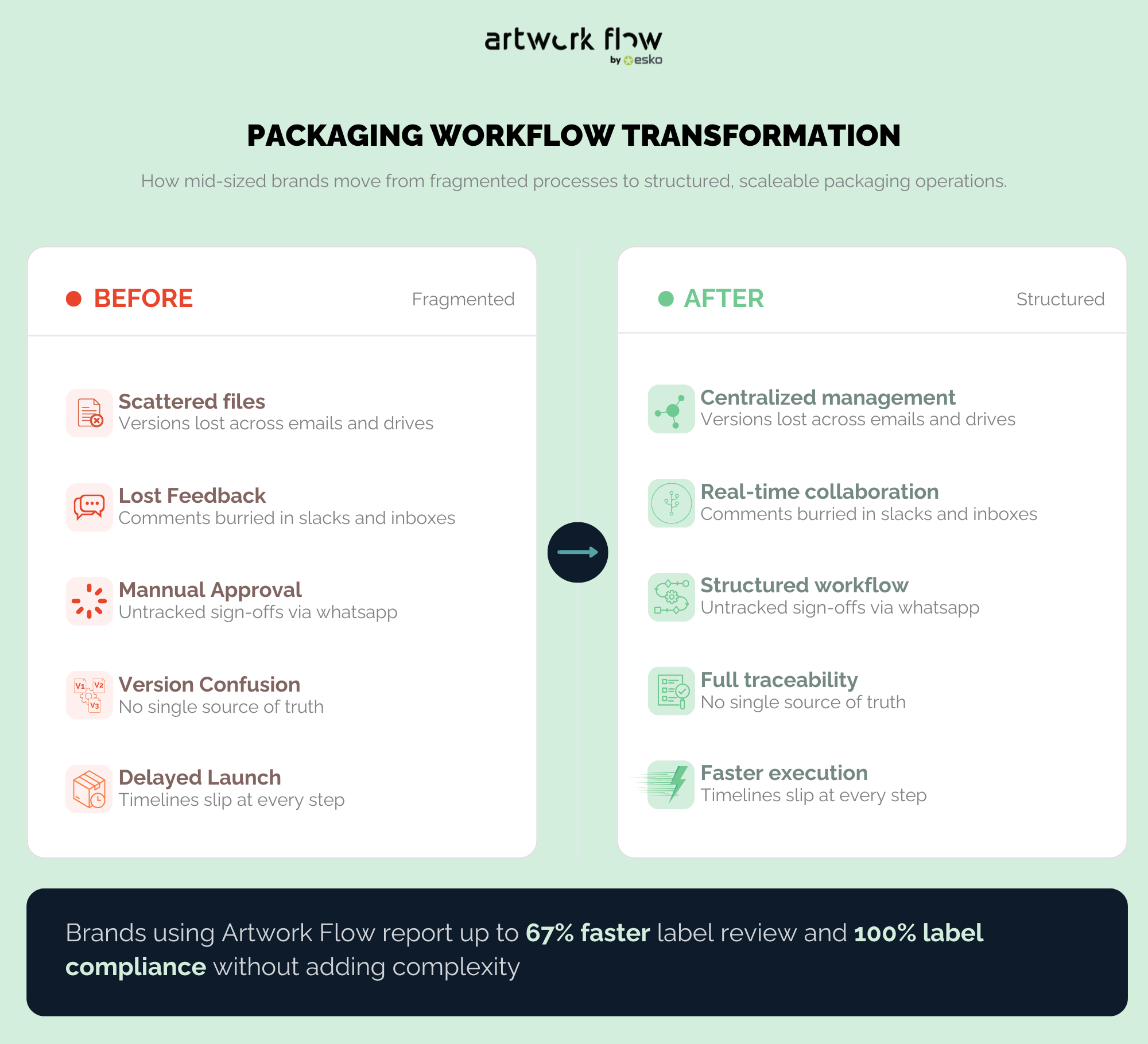
Artwork Flow by Esko provides a way to regain control without adding complexity. - Book a Demo Now to see how it can help your brand get to market fast and error-free.
Artwork Flow | Packaging Management Software Explained


_2.jpg)


